Can my pet eat this?
If your pet has already eaten something toxic, contact your vet immediately.
65 foods
Snacks & Sweets
 Dog
 Cat
Dog. Extremely dangerous. Contains theobromine, which causes vomiting, diarrhea, seizures and can be fatal. Dark chocolate is more dangerous than milk chocolate.
Cat. Very dangerous. The theobromine in chocolate causes irregular heart rhythm, seizures and death in cats.
Toxic dose. Dogs: 20mg theobromine/kg of body weight can cause symptoms. Dark chocolate: ~1.5g/kg, milk chocolate: ~3.5g/kg is already dangerous.
Dog. Extremely dangerous. Causes a sudden drop in blood sugar, liver failure and death. Found in chewing gum and sugar-free sweets.
Cat. Dangerous. Causes low blood sugar and liver failure.
Toxic dose. Dogs: just 0.1g/kg of body weight already causes low blood sugar. 0.5g/kg causes liver failure.
Dog. Dangerous. The high sugar causes obesity and tooth decay. Sugar-free candy often contains xylitol, which is extremely toxic.
Cat. Dangerous. Sugar is not good for cats, and sugar-free candy contains toxic xylitol.
Dog. Dangerous in excess. Causes sodium poisoning: vomiting, diarrhea, seizures, death.
Cat. Dangerous. Small cats are very sensitive to salt. Causes dehydration and kidney damage.
Toxic dose. Dogs: 2-3g of salt/kg of body weight can be fatal. Salty food builds up and causes harm.
Dog. Not recommended. High in sugar and lactose, and may contain chocolate or xylitol. Choose ice cream made for dogs.
Cat. Not recommended. Cats cannot tolerate lactose, and the high sugar causes obesity.
Dog. Safe for adult dogs in small amounts. Do not give to puppies under 1 year old (risk of botulism).
Cat. Not toxic, but high in sugar. Cats cannot taste sweetness, so they show little interest.
Fruits
Dog. Extremely dangerous. Causes acute kidney failure. Just a few grapes can be fatal for a small dog.
Cat. Dangerous. Can cause acute kidney failure, similar to dogs.
Toxic dose. No safe dose. Just 1 grape/raisin can poison a small dog.
Dog. Extremely dangerous. Raisins are even more toxic than fresh grapes because the toxin is concentrated. Causes acute kidney failure.
Cat. Very dangerous. Can cause acute kidney failure.
Toxic dose. Just 2-3 raisins can poison a small dog under 5kg.
Dog. Be careful. The flesh of the avocado has low toxicity for dogs, but the skin, leaves and pit contain persin, which causes vomiting and diarrhea.
Cat. Dangerous. The persin in avocado causes vomiting, diarrhea and difficulty breathing in cats.
Dog. Safe. Rich in vitamins A, C and fiber. Remember to remove the seeds and core because they contain cyanide.
Cat. Feed a small amount and remove the seeds and core. Cats do not need much fruit in their diet.
Vegetables
Dog. Extremely dangerous. Destroys red blood cells, leading to anemia. All kinds of onion are toxic.
Cat. Extremely dangerous. Cats are more sensitive to onion than dogs. Causes severe hemolytic anemia.
Toxic dose. Dogs: 15-30g/kg of body weight. Cats: just 5g/kg is already dangerous. Builds up over time.
Dog. Dangerous. 5 times more toxic than onion. Destroys red blood cells and causes anemia.
Cat. Very dangerous. Cats are extremely sensitive to garlic. Causes hemolytic anemia.
Toxic dose. Dogs: 15-30g/kg. Cats are many times more sensitive, and only a very small amount is needed.
Dog. Wild mushrooms are very dangerous. Many kinds cause liver failure, seizures and death. Mushrooms bought at a market or supermarket are safe.
Cat. Wild mushrooms are extremely dangerous. They cause liver failure and death. Ordinary store-bought mushrooms are safe.
Dog. Safe. Cooked corn kernels are good. Do not let dogs chew corn cobs, because they cause intestinal blockage.
Cat. Not toxic, but hard to digest. Feed a small amount of cooked corn kernels, and no cob.
Meat & Protein
Dog. Large raw bones can be chewed. Do not give cooked bones, because they break easily and cause intestinal perforation. Chicken, duck and fish bones are very dangerous.
Cat. Dangerous. Bones can break into sharp pieces that cause intestinal perforation and choking.
Dog. Dangerous. Cooked bones break easily into sharp pieces, causing intestinal perforation, intestinal blockage or choking.
Cat. Very dangerous. Sharp bone pieces cause perforation of the digestive tract.
Dog. Not toxic, but high in fat and cholesterol. The small bones inside can be dangerous. Feed very little.
Cat. Not toxic, but the bones in balut can be dangerous. Limit how much you feed.
Dog. Nutritious, but gives too much vitamin A if fed often. Maximum 5% of the diet.
Cat. Good in small amounts. Too much liver causes vitamin A poisoning. Maximum 5% of the diet.
Dairy
Dog. Many dogs cannot tolerate lactose, which causes diarrhea and bloating. Lactose-free milk is safer.
Cat. Most adult cats cannot tolerate lactose. Causes diarrhea. Use milk made specifically for cats.
Dog. Has less lactose than milk. Safe in small amounts as a treat. Avoid salty types.
Cat. Feed very little. Many cats cannot tolerate lactose. Choose low-salt types.
Dog. Safe. Unsweetened yogurt has beneficial bacteria that are good for digestion. Avoid types with sugar or xylitol.
Cat. Feed a small amount. Probiotics are good for digestion, but cats are sensitive to lactose.
Grains & Starches
Dog. Plain white bread is safe but low in nutrition. Avoid bread with raisins, garlic or xylitol.
Cat. Not toxic but not necessary. Low in nutrition for cats.
Dog. Plain noodles are safe but low in nutrition. Give only as a light snack, not as a replacement for a main meal.
Cat. Not toxic, but cats do not need starch. Feed very little, if any.
Dog. Very good. White rice is easy to digest and often used when a dog has a stomach ache. Brown rice is higher in fiber.
Cat. Safe in small amounts. White rice is easy to digest, but cats mainly need protein.
Vietnamese Foods
Dog. Dangerous. Pho broth contains onion, garlic, spices and very high salt, all of which are toxic or harmful to dogs.
Cat. Dangerous. The onion and garlic in pho are extremely toxic to cats. High salt also harms the kidneys.
Dog. Dangerous. The extremely high salt content causes dehydration and kidney damage. Never feed it to pets.
Cat. Very dangerous. Extremely high salt causes sodium poisoning and kidney damage in cats.
Dog. Dangerous. Extremely high salt content. Just 1 spoonful can cause sodium poisoning in a small dog.
Cat. Very dangerous. Extremely high salt causes seizures and kidney damage.
Toxic dose. 1 tablespoon of soy sauce contains ~900mg of sodium, too dangerous for dogs under 10kg.
Dog. Dangerous. The high oil and fat content causes pancreatitis. Often contains onion, garlic and toxic spices.
Cat. Dangerous. Oil and fat cause pancreatitis, and the onion and garlic inside are extremely toxic to cats.
Drinks
Dog. Dangerous. Caffeine causes increased heart rate and seizures, and can be fatal. This includes coffee grounds.
Cat. Very dangerous. Cats are more sensitive to caffeine than dogs. Causes cardiovascular disorders.
Toxic dose. Dogs: 150mg caffeine/kg of body weight can be fatal. 1 cup of coffee has ~95mg caffeine.
Dog. Dangerous. Contains caffeine and theanine. Green tea and black tea are both harmful.
Cat. Dangerous. The caffeine in tea causes heart and nervous system disorders in cats.
Dog. Extremely dangerous. Causes rapid alcohol poisoning: vomiting, diarrhea, difficulty breathing, coma, death.
Cat. Extremely dangerous. Cats are extremely sensitive to alcohol. A very small amount already causes poisoning.
Toxic dose. Dogs: 5.5ml of pure alcohol/kg of body weight can be fatal. Beer is also dangerous.
Dog. Safe in small amounts. Rich in potassium, and can cause diarrhea if drunk in large amounts. Avoid sweetened coconut water.
Cat. Give very little. High potassium can cause digestive problems.
Nuts & Seeds
Dog. Dangerous. Causes muscle weakness, vomiting, tremors and fever. Symptoms usually appear within 12 hours.
Cat. Dangerous. Causes muscle weakness and nervous system disorders.
Toxic dose. Dogs: 2.4g/kg of body weight already causes symptoms. Combined with chocolate, it is even more dangerous.
Dog. Not toxic, but high in fat. Feed only roasted peanuts with no salt and no seasoning. Watch out for allergies.
Cat. Not toxic, but cats do not need them. High in fat, so feed very little, if any.
Dog. Not toxic, but high in fat, and can cause pancreatitis if eaten in large amounts. Feed only a small amount, unsalted.
Cat. Not toxic, but high in fat. Not necessary in a cat's diet.
Seafood
Dog. Dangerous. Raw fish contains parasites and bacteria. Raw salmon can cause salmon poisoning disease, which can be deadly.
Cat. Dangerous. Bacteria and parasites. The enzyme thiaminase destroys vitamin B1.
Dog. Safe when cooked with no seasoning. Cut into small pieces to avoid choking. Feed in moderation.
Cat. Safe when cooked and cut into small pieces. Feed a small amount, not as a replacement for a main meal.
Dog. Safe when cooked with the shell removed. Rich in protein, but can cause allergies in some dogs.
Cat. Safe when cooked with the shell removed. Watch out for seafood allergies. Feed a small amount.
Dog. Safe when cooked, but do not feed it often. Tuna accumulates mercury.
Cat. Cats like tuna, but do not feed it often. It accumulates mercury and is addictive, leading cats to refuse other food.
Dog. Very good. Rich in omega-3, and good for skin and coat. Must be cooked: raw salmon contains dangerous parasites.
Cat. Excellent for cats. Rich in omega-3 and protein. Must be fully cooked.
Dog. Safe. Rich in protein and low in calories. Peel and cook, with no seasoning.
Cat. Cats really like shrimp. Safe when cooked and peeled, with no seasoning.
This information is for reference only and does not replace professional veterinary advice. If your pet has eaten something toxic, contact your vet immediately.
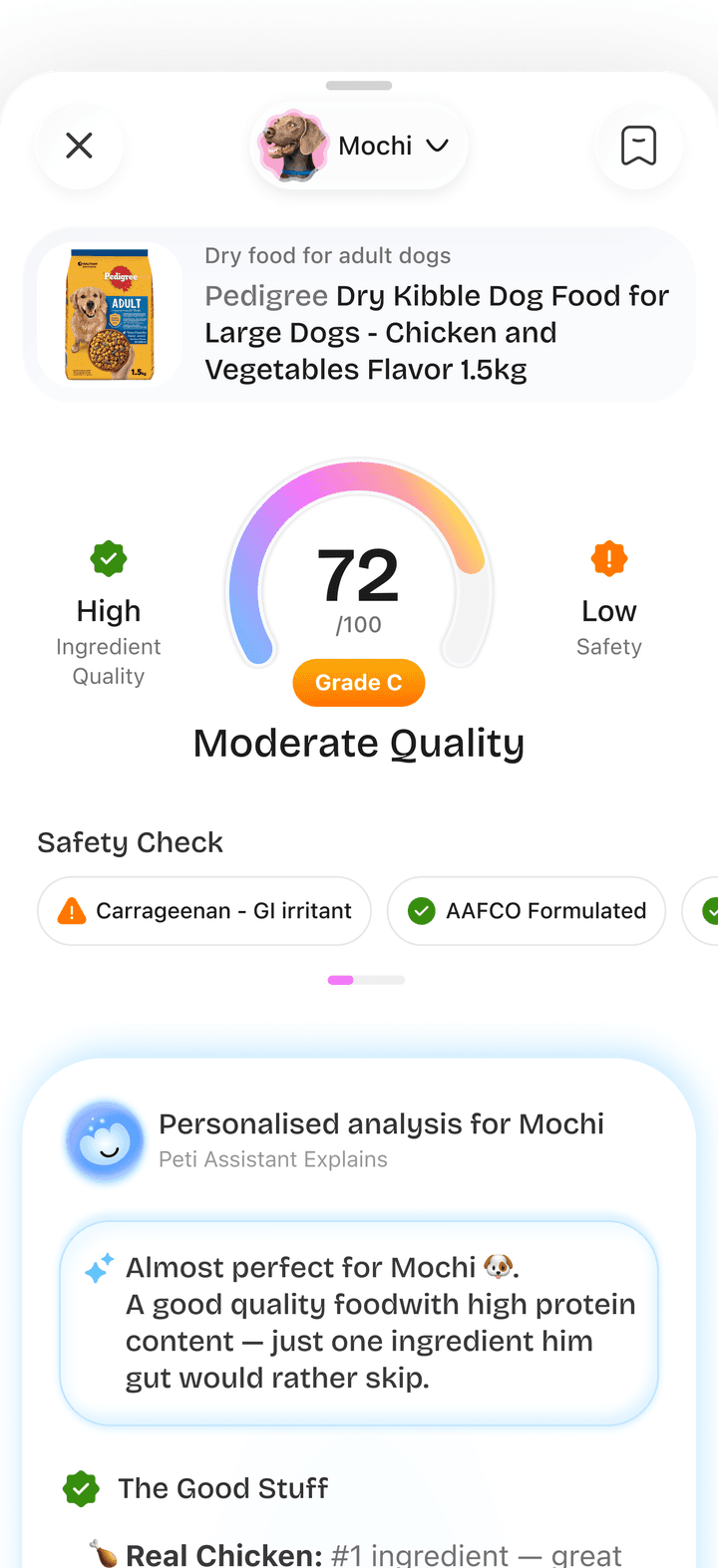
Holding a packaged food? Scan it.